

Real‑time design is reshaping the way broadcast environments are conceived, developed, and delivered, with tools such as Unreal Engine opening new creative and technical possibilities for modern television. At Lightwell, this shift has become central to how we build virtual sets and broadcast graphics for major broadcasters including the BBC, ITV, Discovery+, and Mediacorp Singapore. Since 2020, our work with Unreal Engine has allowed us to create environments that feel grounded, authentic, and visually rich, whether they are enhanced scenic photographs, animated CG spaces for LED volumes, or fully three‑dimensional virtual studios.
What distinguishes real‑time design is the flexibility it brings to the entire production process. Unreal Engine integrates seamlessly with established broadcast systems such as Vizrt and Disguise, allowing virtual sets to slot naturally into existing workflows. Designs can be repurposed across programmes and formats, updated quickly with new lighting or textures, and explored much earlier in the creative process. This immediacy transforms collaboration: directors, producers, and designers can evaluate ideas live, navigate the environment together, and make decisions with a clear understanding of how the final output will appear on screen.
The ability to experiment rapidly is one of real‑time design’s greatest strengths. Instead of waiting for lengthy renders, teams can adjust lighting, materials, or layout and see the results instantly. This encourages iterative refinement and often leads to unexpected visual discoveries – moments where a subtle reflection, a shift in colour, or a new camera angle reveals something that becomes central to the final design. These “happy accidents” are far more likely to emerge when the creative process is fluid and interactive.
Real‑time workflows also provide a level of visual certainty that traditional pipelines struggle to match. Because presentation visuals are generated directly from the real‑time environment, what clients approve during development is exactly what appears on air. There is no reinterpretation, no colour drift, and no surprises in scale or lighting. The creative intent is preserved from concept through to broadcast.
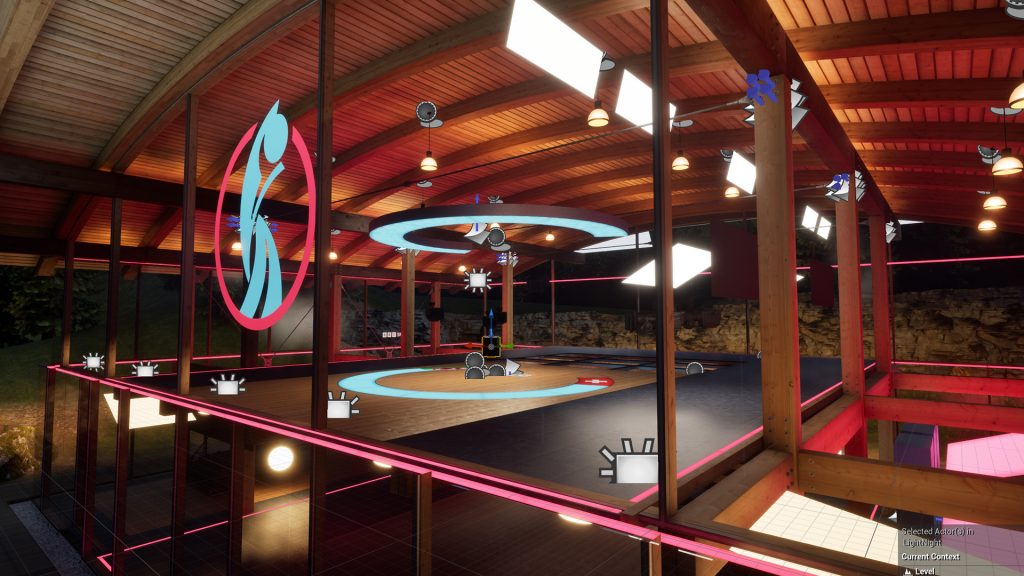
Underlying all of this is a commitment to realism. At Lightwell, we focus on how materials behave, how surfaces respond to light, and how architectural details support the narrative of a programme. Subtlety matters: accurate reflections, believable textures, and carefully considered lighting ensure that virtual sets feel credible and integrated rather than artificial or distracting. As real‑time tools continue to evolve, they will only expand what is possible, offering broadcasters new ways to imagine, design, and experience the spaces that shape their storytelling.
I’ve written some more on this, over on the Lightwell.tv website:- https://www.lightwell.tv/blog-posts/how-real-time-design-is-transforming-broadcast-set-design